Gravity supplies the head
Potential energy becomes shaft work. Pwater = ρgQH. A change in head has a linear effect on available hydraulic power.
How mountain water became the rhythm of woollen cloth.
Adjust experimental teaching parameters, not claimed historical performance measurements.
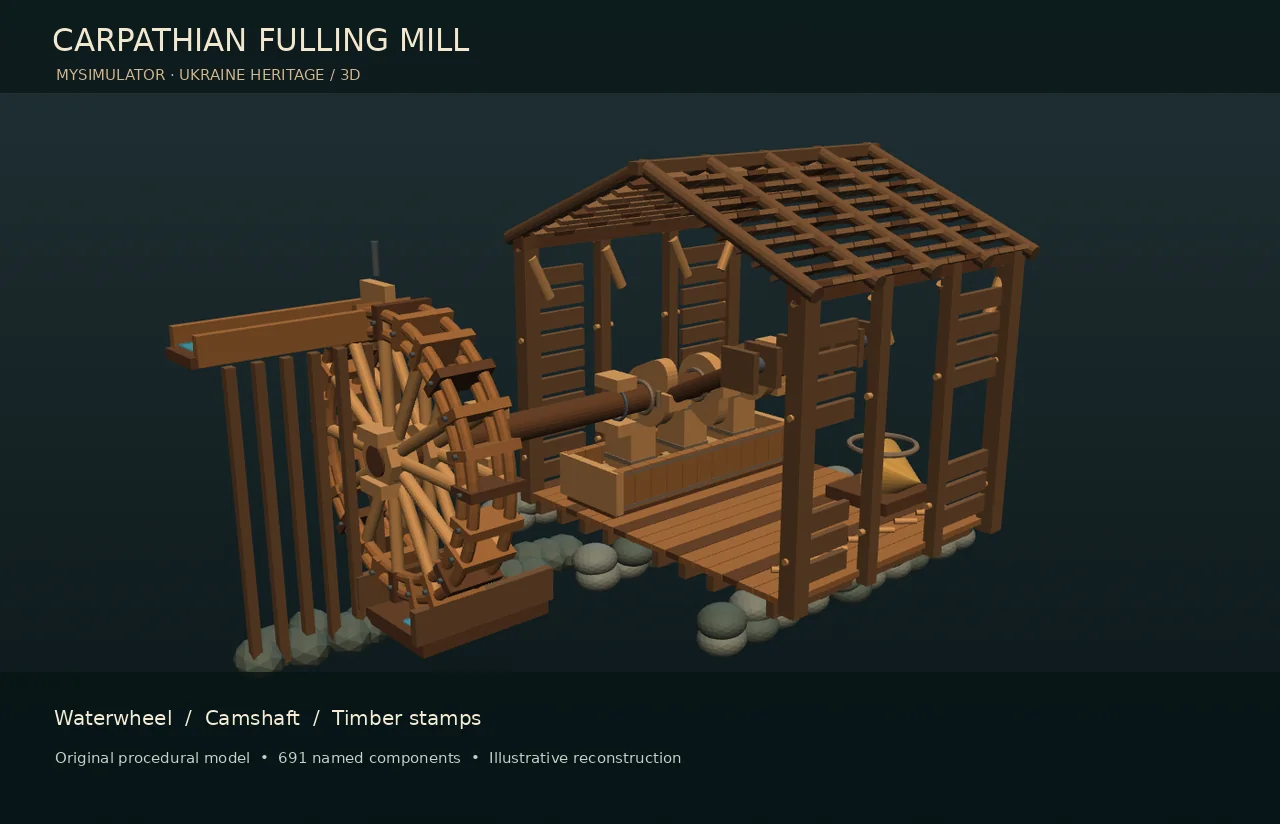
Energy is never created by a waterwheel. The wheel and shaft change the form and speed of energy transfer; the cam converts rotation into periodic lift.
Potential energy becomes shaft work. Pwater = ρgQH. A change in head has a linear effect on available hydraulic power.
As the eccentric lobe rises beneath the follower, a timber hammer lifts. On release it falls, compressing the wool with warm water.
Transcarpathian open-air museums preserve examples of water-powered milling and cloth processing; this digital reconstruction is not an authenticated replica.